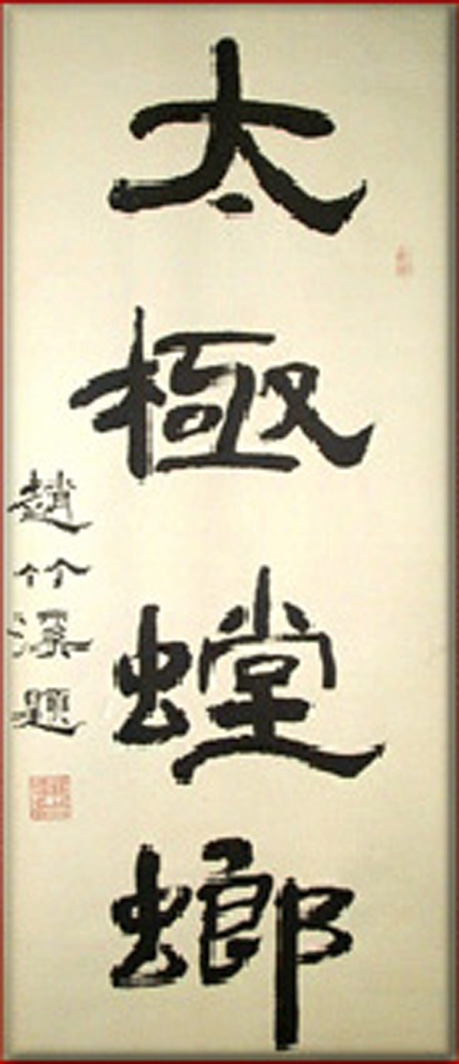
Tai Chi Praying Mantis (Taiji Tanglang Quan)
Tai Chi Praying Mantis in the Chuk Kai lineage is a Northern Shaolin-derived system that blends the precision and trapping of Praying Mantis with the internal principles of Taiji. The art emphasizes sensitivity, timing, and economy of motion — using sticking, adhering, and redirection rather than force against force. Characteristic mantis hooks, intercepting hands, and close-range entries are guided by relaxed structure, rooted stance, and whole-body connection, allowing techniques to flow seamlessly from defense to counter. The result is a method that feels both crisp and elastic: quick changes, subtle angles, and continuous pressure that unbalances an opponent without relying on brute strength.
Within the Chuk Kai lineage, this integration is preserved through a structured curriculum of forms, partner drills, and applications that move from external clarity to internal refinement. Training develops alignment, breath coordination, and intent (yi), so that power is issued from the body as a unified whole. Practitioners learn to read touch and intention, using softness to neutralize and precision to finish. The lineage carries forward a balance of martial function and personal cultivation — where skill in application grows alongside calmness, awareness, and the ability to remain composed under pressure.
The Shifu is a 9th Generation Tai Chi Mantis instructor in the Chuk Kai lineage — a direct student of Kam Yuen and Paul Eng, the founders of Tai Mantis Kung Fu in America, and has trained extensively with Wong Lam Ling of the Tai Ji Praying Mantis Federation, studying Hunyuan Chen Taiji, Yang Tai Ji, and Taiji Mantis Kung Fu.
Federation
Osaka Lohan is the Japan Chapter of the Chuk Kai Tai Chi Praying Mantis Federation (USA). The Shifu serves as Japan Chapter President and sits on the Federation Board of Directors.
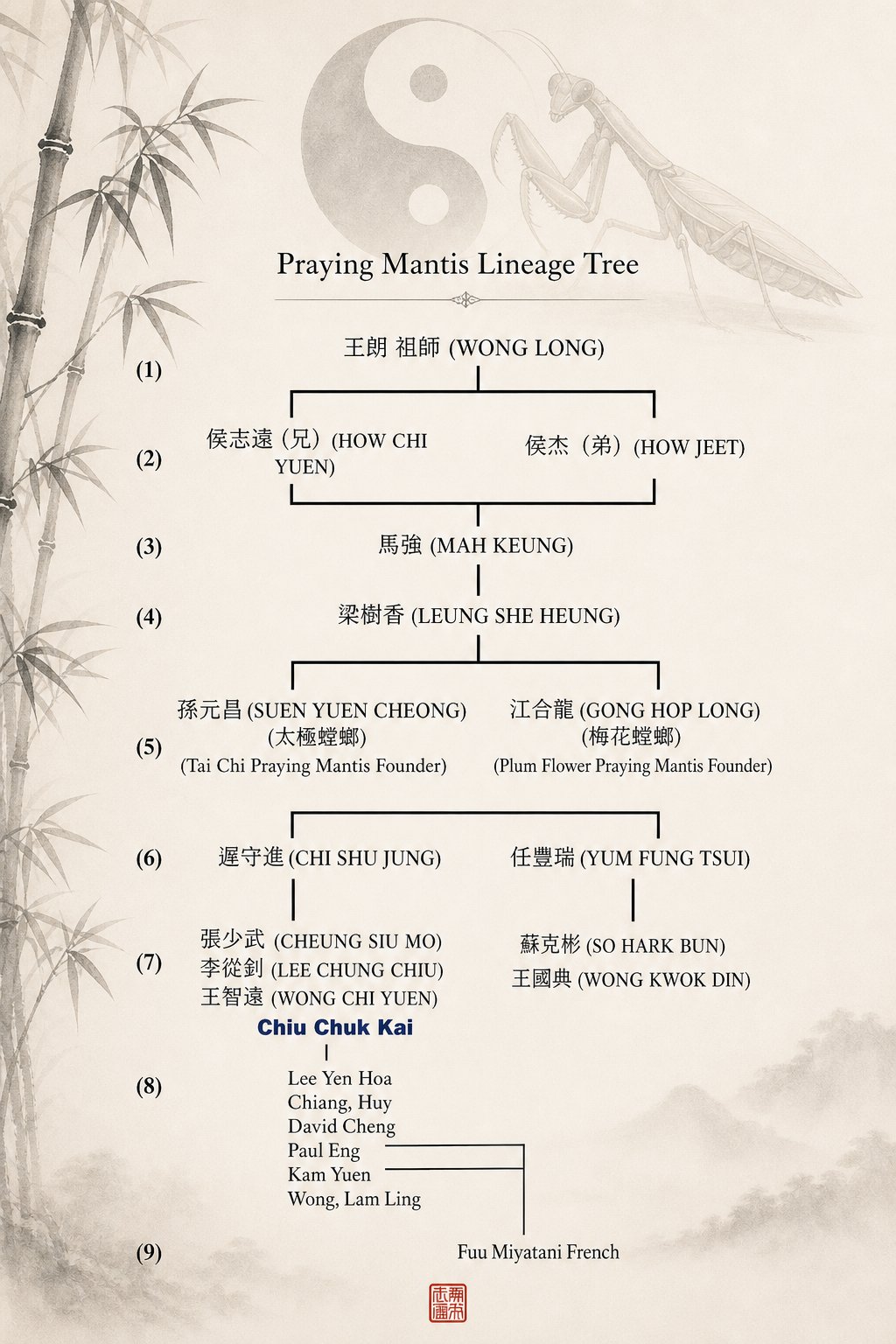
Tai Chi Praying Mantis — Chuk Kai Lineage
Seven Star Praying Mantis
The Seven Star Praying Mantis style traces its roots to Master Wong Long, an unshaven monk of the Henan Shaolin Temple during the transition between the Ming and Ching dynasties. Though Wong Long had studied seventeen different Kung Fu styles, he could not defeat his Shaolin brothers. Walking in contemplation one day, he witnessed a fight between a Praying Mantis and a Cicada. Fascinated by the aggressiveness, speed, and strength of the apparently overmatched Mantis, he took it home for study — prodding it with a reed and carefully cataloging its every reaction.
Over time Wong Long synthesized these observations into the Twelve Key Words Verbal Formula, the Seven Long and Eight Short hand patterns, Eight Rigid hand patterns, Twelve Flexible hand patterns, and Eight Vulnerable and Eight Lethal points of attack. He then added the footwork of the monkey — agile, unpredictable, and grounded — to complete the system.
The style takes its name from the Big Dipper constellation. The inner meaning: the disciples of this style should spread all over the world.
In the mantis, Wong Long found something all serious practitioners eventually encounter — the smaller force, applied with precision and awareness, that moves the larger one.
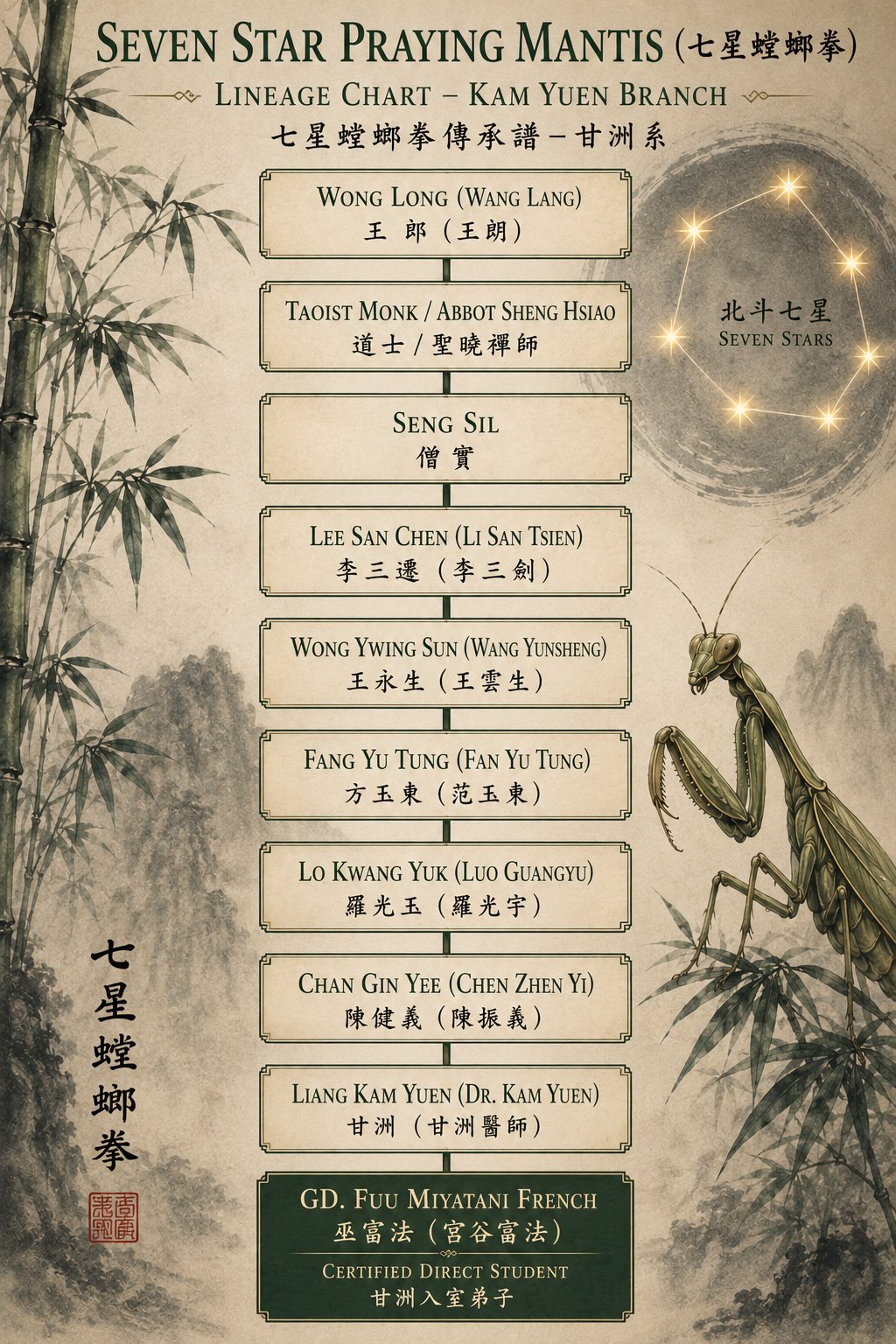
Seven Star Praying Mantis — Lineage Chart, Kam Yuen Branch
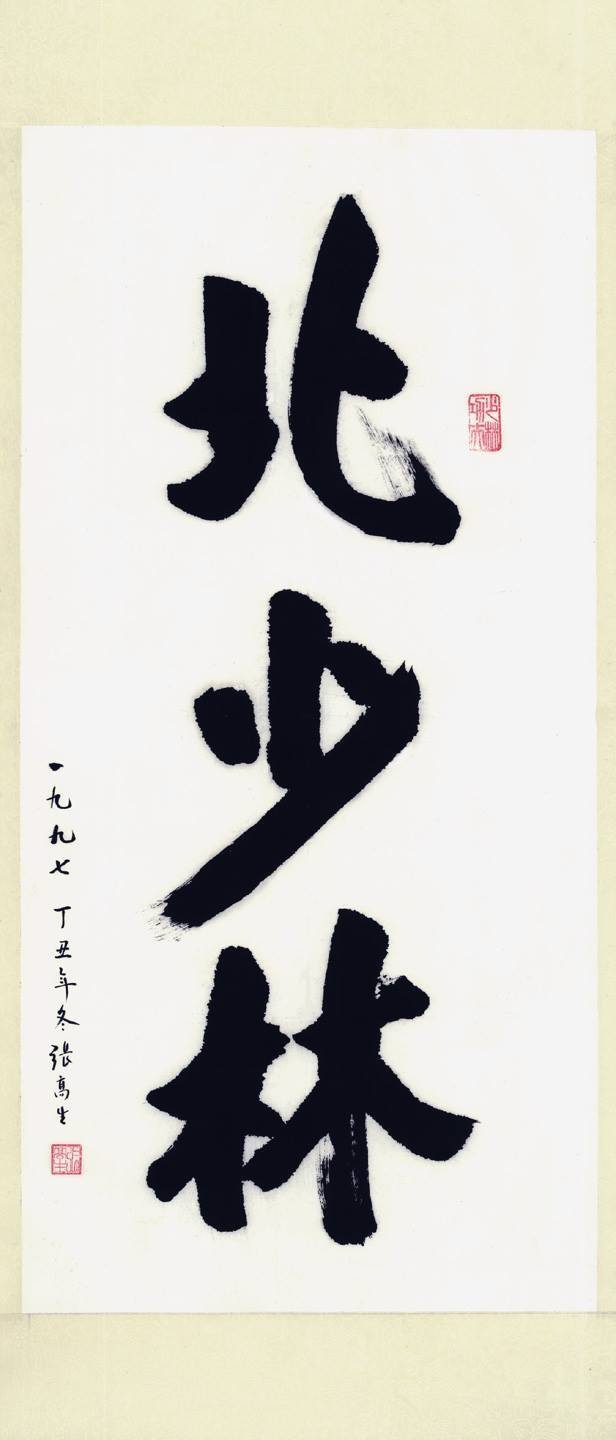
Northern Shaolin
The Shifu holds certification as a 36th Generation Northern Shaolin Temple instructor, from the Grandmaster Wong Jac Man lineage.
Shizong Gu Ru Zhang was born in the late 1800s in Jiang Su Province, Northern China. Through a remarkable set of circumstances he became a disciple of Shizong Yan Xi Wan in the early 1900s — a Shaolin Monk of the Bei Shaolin system — before the final burning of the Shaolin Monastery around 1927, while traditional Martial Monks were still training there. He mastered Tie Zhang (iron palm), Golden Bell, and the full Northern Shaolin system, then traveled through Northern China absorbing all the major northern styles.
He also learned Zhaquan from Yu Zen Sheng, Laojia Chen Taijiquan from Li Jing Lin, and Baguazhang and Xingyiquan from Sun Lu Tang. This entirety passed to Shizong Yan Shang Wu, who kept everything traditional and pristine, and then to Shizong Chen Guo Wei — whose documented feats include extinguishing a candle's flame from six feet away and drilling holes in solid brick with a single finger.
The Five Original Quan of the Shaolin Temple
Dragon Fist, Tiger Claw Fist, Leopard Fist, Snake Fist, White Crane Fist. Together with the Five Major Northern Systems (Shaolin, Huaquan, Zhaquan, Faquan, Paoquan), these form the foundation of the Bei Shaolin curriculum.
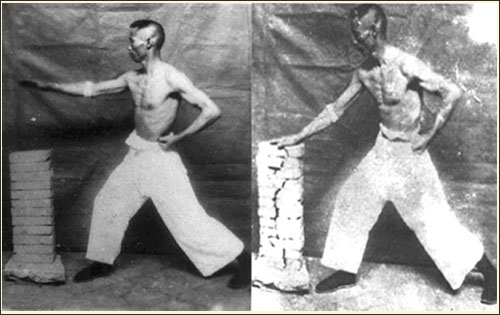
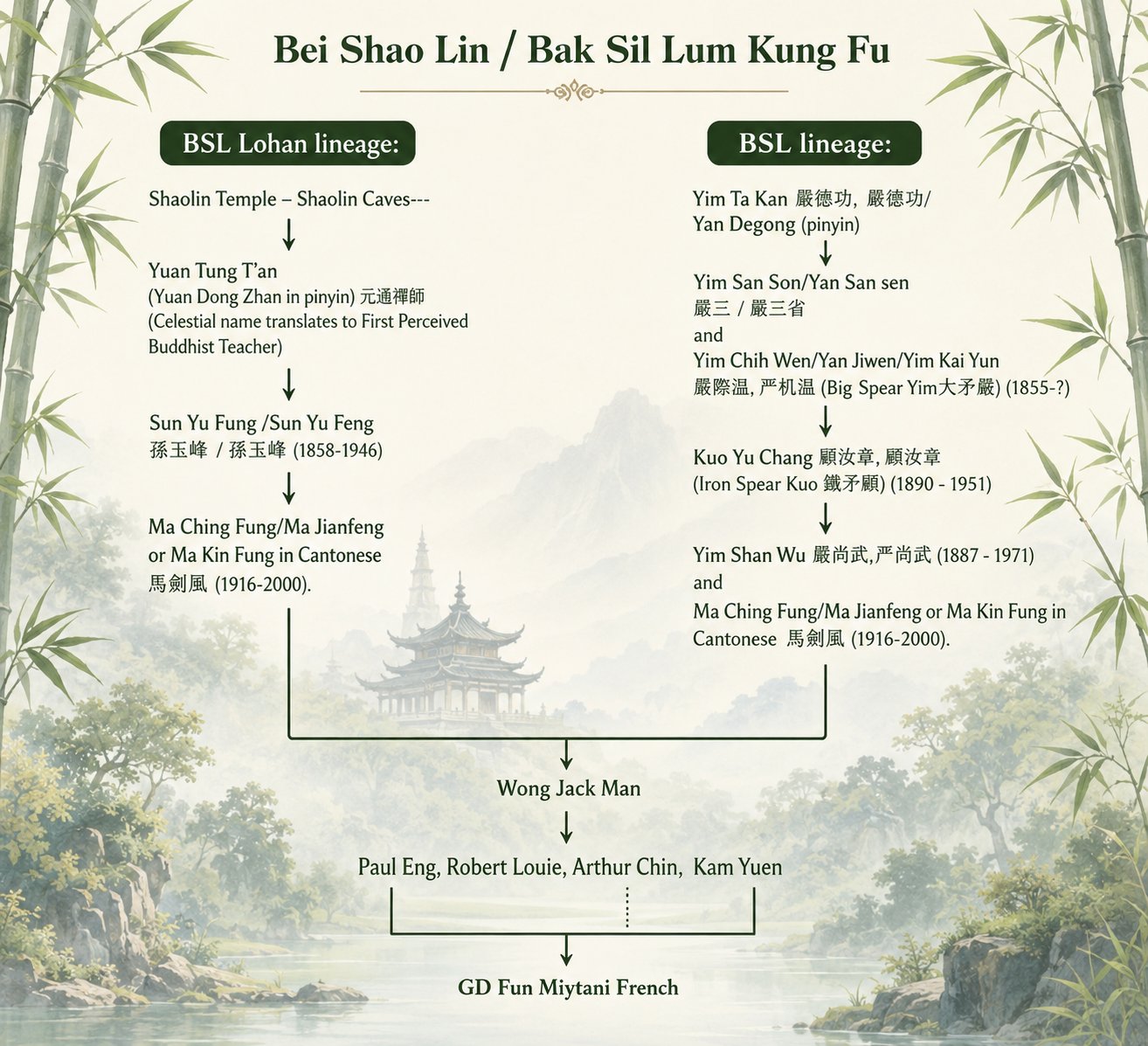
Bei Shaolin Lineage
Hunyuan Chen 24 Taijiquan
Chen style is the oldest of the five major Taijiquan families, and its 24-form curriculum brings the essential movements of Chen practice into a form accessible to modern students while preserving the coiling energy, alternating soft and explosive power, and spiral force generation that characterize the style.
At Osaka Lohan, Hunyuan Chen 24 is taught in the context of the Tai Chi Mantis curriculum — students come to understand not just the forms themselves but how the internal mechanics of Hunyuan Chen practice inform the Praying Mantis techniques that grew alongside the Taiji tradition. The Shifu has trained extensively in Hunyuan Chen style under Wong Lam Ling of the Tai Ji Praying Mantis Federation.
Chen Taiji does not let you pretend. The coiling and the silk-reeling find whatever is held or misaligned in the body, and they offer it back to you for consideration.
Yang 24 Taijiquan
The Yang 24 — sometimes called the Beijing Form — is perhaps the most widely practiced Taiji sequence in the world. Developed in 1956 as a simplified introduction to Yang style Taijiquan, it distills the essence of the longer Yang tradition into a form that can be learned in a reasonable time frame without sacrificing the core principles of the art.
At Osaka Lohan, Yang 24 is taught as it was designed to be taught — as a genuine Martial Art, not merely a health exercise. Students learn the martial application of each posture alongside the meditative and health dimensions of the practice. Push Hands training develops sensitivity and the practical application of Taiji principles in contact.
楊式二十四式太極拳は、その丸みのある動きと内なる静けさで知られています。武道として、また動く瞑想として指導します。
Chiu Taiji Palm
The Chiu Taiji Palm is part of the Chuk Kai curriculum — a Taiji-based open-hand practice that emphasizes the flowing, circular energy of the Taiji tradition within the Praying Mantis framework. It represents the internal heart of the Chuk Kai system, the place where the soft and the hard meet without conflict.
The Shifu teaches this form as part of the broader Tai Chi Mantis curriculum, connecting it explicitly to the Chan foundations of the tradition. In the Lohan hermitage context, the Taiji Palm becomes as much a meditation practice as a martial one — form as moving stillness, movement as sitting in motion.